Building a Skilled Generation for Rwanda’s Water Sector
Published on Nov 20, 2025
By IWA Young Water Professionals Rwanda Chapter
In Rwanda, as in many countries, the transition from university to professional life can be a steep climb for bachelor’s degree graduates. Academic training provides strong theoretical foundations and some practical exposure, but it often remains limited in scope and loosely connected to real-world challenges. As a result, opportunities for graduates to apply their knowledge in practical contexts remain scarce, slowing the development of skilled professionals urgently needed to address issues such as climate-induced floods, urban water scarcity, and wastewater management.
“Rwanda’s water sector has high ambitions and those who will realise them must have their capacity continuously strengthened to be fit for the challenge,” said Mugwaneza Ishimwe Bénigne, Coordinator of the IWA YWP Rwanda Chapter and part of the IWA Leadership Programme for Young Water Professionals (IWA LeaP). “The goal with the Summer School is to provide students with theoretical knowledge and practical experience that prepares them for impactful careers in the water sector. This aligns with the organisation’s mission, and the Summer School stands as another initiative complementing ongoing efforts.”
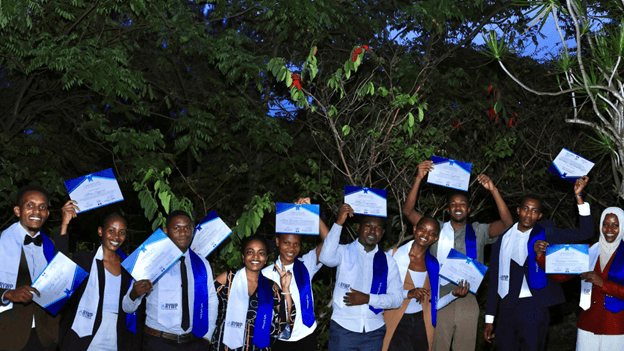
A portrait of the first cohort of the RYWP Summer School Fellowship — ten fellows who completed the 2025 programme.
Bridging the Gap Between Academia and Industry
To address this challenge, the IWA YWP Rwanda Chapter launched the Summer School Fellowship, a two-month intensive programme designed to bridge academia and the workplace. The first cohort, held from 15 July to 30 September 2025, brought together fresh graduates and final-year students in water and environmental engineering. The programme strengthened both technical capacity and professional readiness by exposing participants to trends in water management, career pathways, and networking opportunities with experts, mentors, and institutions.
“Being part of this Summer School was an eye-opening experience,” said Uwimana Soumaya, a participant in the programme. “This programme polished my knowledge and helped me better understand how to use HEC-HMS and HEC-RAS tools in flood management.”
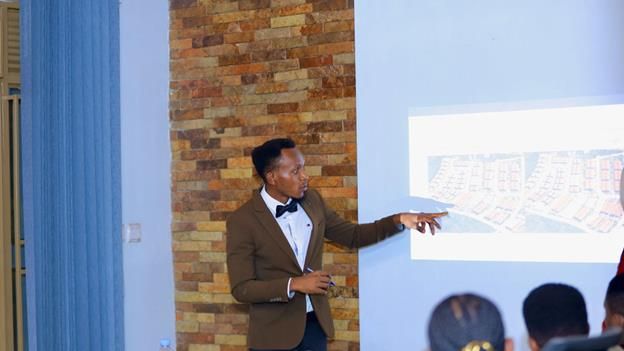
A fellow presenting his project before sector leaders and senior practitioners during the Summer School Fellowship graduation ceremony.
Hands-On Learning with Real Projects
The programme emphasised learning by doing as participants received training on industry-standard software such as ArcGIS, HEC-HMS, and HEC-RAS tools essential for water resource management. They combined technical analysis with fieldwork, ensuring classroom knowledge translated into professional practice. Real-world projects undertaken during the programme aligned with participants’ academic and professional interests while maintaining strong connections to Rwanda’s water management priorities.
Participants worked on flood risk modelling in vulnerable catchments, stormwater prediction using nature-based solutions, the design of wastewater reuse systems for urban communities, and rainwater harvesting strategies to ease urban water scarcity. These projects demonstrated how young professionals, when equipped with the right tools and mentorship, can contribute innovative solutions to national challenges.
“I was very impressed by the participants’ confidence in presenting their work,” added Methode Rutagungira from WASAC. Echoing this, Professor Umaru Garba Wali from the University of Rwanda stated, “This kind of training is invaluable for fresh graduates. It prepares them to enter the job market, whether as consultants or professionals within the sector.”
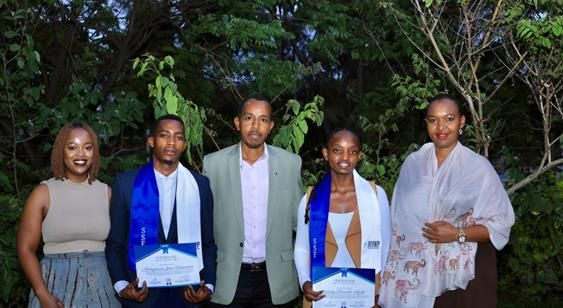
IWA YWP Rwanda Chairperson and Coordinator, together with the Country Director of WaterAid Rwanda, present graduation certificates to Summer School Fellows.
Mentorship and Professional Exposure
Beyond technical training, participants gained valuable skills in presenting their findings, engaging with stakeholders, and communicating complex ideas with confidence. Throughout the Summer School, they presented their work to peers, mentors, and stakeholders, receiving feedback that deepened their understanding and strengthened their confidence.
The graduation ceremony crowned this experience, providing a platform to showcase their projects before senior practitioners who shared reflections and encouragement.
“The most rewarding part was watching the fellows grow in professionalism and their openness to constructive feedback. They welcomed positive criticism and embraced it as part of their learning,” shared Nishimwe Rita, one of the programme mentors. “By the end, they were not just learners but problem solvers ready to take on real challenges.”
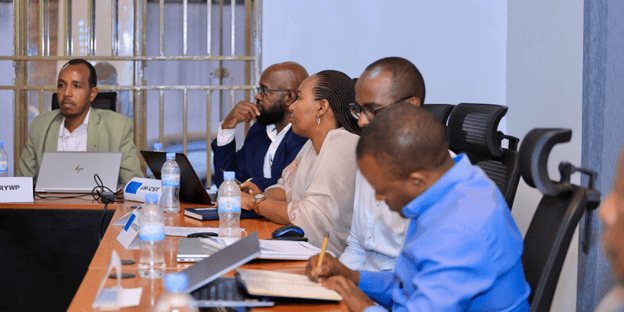
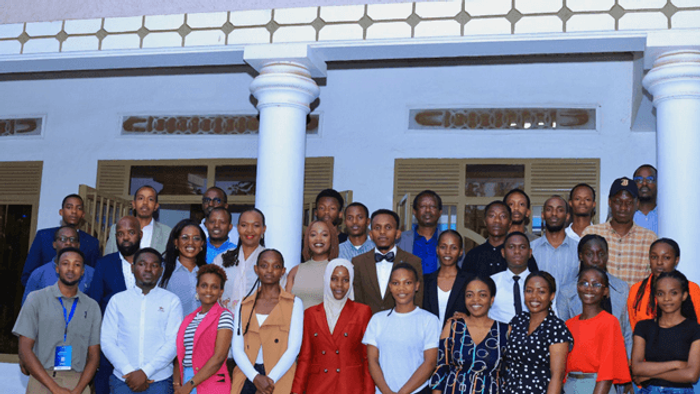
Senior practitioners and partners who attended the Summer School graduation ceremony.
Looking Ahead
The success of the first cohort positions the Summer School Programme as a model for youth empowerment in the water management field. By combining technical training, project-based learning, and mentorship, the programme demonstrates that investing in young professionals goes beyond capacity building; it cultivates a resilient pipeline of leaders ready to advance sustainable water and environmental management in Rwanda.
Building on lessons learned, the IWA YWP Rwanda Chapter remains committed to strengthening and expanding the programme to reach more emerging professionals and enhance its impact. The programme will continue to serve as a platform for excellence and cultivate a generation of competent, innovative professionals ready to lead Rwanda’s water and environmental management.
The organisation welcomes partners who share this vision and are interested in collaborating to expand and scale this impactful initiative. Importantly, the Summer School participants are also members of the IWA YWP Rwanda Chapter. They represent the next generation of leaders who will drive the organisation’s thematic hubs, which form the backbone of its work.
Through these hubs, young professionals advance action and innovation in smart water management, climate-resilient WASH, capacity development, and sustainable landscapes.
Learn more about IWA YWP Rwanda and its hubs at www.rywp.org.