Building Climate Resilience and Universal Access in Eswatini
Published on Aug 11, 2026
By Mbongwa Mahlaba, Senior Manager SHEQ; Lulu Ndzimandze, Specialist Environmental Management; and Futhi Mazibuko, Environmental Specialist.
The Eswatini Water Services Corporation (EWSC) provides potable water and wastewater services across 22 urban and peri-urban areas nationwide, operating 24 water treatment plants and 10 wastewater treatment plants. In doing so, it faces a complex operational and environmental landscape marked by climate vulnerability and resource constraints.
As a utility heavily reliant on surface water, EWSC is particularly exposed to climate unpredictability: changing weather patterns and rising temperatures threaten the security of its water sources, while increasingly frequent droughts affect water availability, consumption, and storage. Extreme weather also brings flooding risks that can physically damage operational systems.
High water losses further challenge operational efficiency. EWSC's Non-Revenue Water rate stands at 43% (down just 2% since 2024), driven mainly by physical losses from ageing infrastructure, underground leakages, and unauthorised use. Energy-intensive treatment and fuel-dependent systems also generate significant Scope 1 and 2 emissions, making carbon footprint management a priority. Finally, despite its mandate to serve urban and peri-urban areas, EWSC continues to face gaps in water and sanitation access across low-income, peri-urban, and expanding rural communities.
Adapting to climate change
To adapt to the impacts of climate change, EWSC anticipates and plans for future threats by continuously evaluating water source vulnerability. Given the heavy reliance on surface water, the utility collaborates closely with Joint River Basin Authorities and the Department of Meteorology to monitor river health and provide early warnings for extreme weather.
EWSC has developed a comprehensive adaptation strategy in its infrastructure and management practices, supported by partners such as the World Bank. Key initiatives include drought management plans, a dedicated Drought Management Team, a drought augmentation project for Mbabane CBD, and integration of regional water supply systems.
To protect critical operations from extreme weather, the utility has equipped vulnerable facilities with resilient infrastructure to prevent flood damage, such as sluice gates installed at its Matsapha raw water intake works. Water supply security is further reinforced through alternate abstraction practices such as the one observed at the Woodlands water treatment plant, which primarily abstracts from the Hawane Dam but alternates to the Mbuluzi River during periods of low levels.
To maximise the usage of abstracted water and address high physical losses, EWSC targets underground leakages by monitoring minimum night flows at the District Metered Area (DMA) level and applying pressure management through time- or flow-modulated service delivery, achieving a 10% reduction in physical losses. Additional measures include the installation of 45 total smart manholes, SCADA-based reservoir level monitoring, pipe replacements, and upgrades to intake works projects, plant processes, and sludge recirculation.
Finally, the utility is scaling up a prepaid water model, including meters, kiosks, and communal standpipes, to enable real-time consumption monitoring, reduce unauthorised usage, and foster conservation practices during periods of water stress in the region.
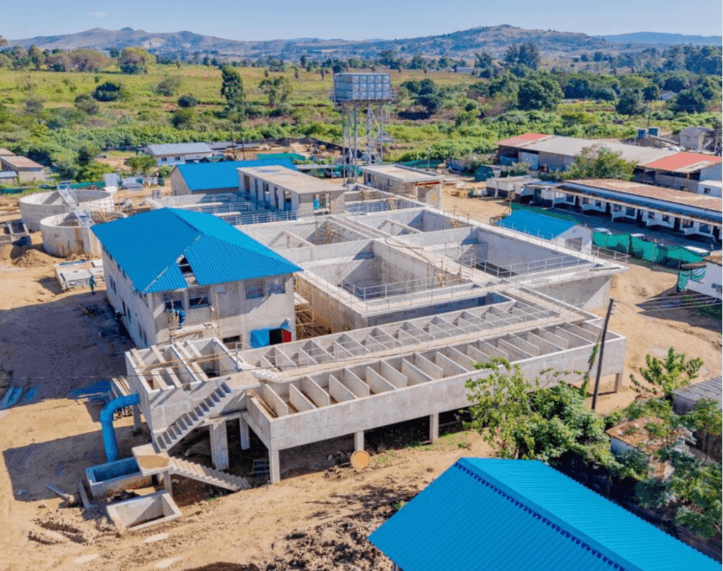
Fig 1. The Manzini Region Water Supply Project in Matsapha
Mitigation actions
While adaptation ensures the operational resilience of the utility, mitigation ensures that growth remains climate-conscious by addressing the root causes of climate change across the entire service chain. Operating energy-intensive treatment systems and fuel-dependent operations carry significant carbon implications, prompting EWSC to take decisive leadership in carbon footprint reduction.
In the financial year of 2024-2025, EWSC calculated its carbon footprint for the first time, covering its two major emissions sources: electricity (scope 1) and fuel (scope 2). To drive continuous improvement, an annual reduction goal of 3% for scope 1 and 2 emissions, specifically targeting wastewater treatment works, was established. This reduction target reflects the growing need for localised climate action and directly aligns with EWSC's participation in the revision of Nationally Determined Contributions (NDC 3.0).
EWSC actively minimises its emissions through energy management and process optimisation. Project designs maximise the use of gravity lines in distribution systems to reduce pumping requirements, while solar energy powers pumps in some cases where necessary. Energy efficiency is further enhanced through tariff optimisation (time-of-use strategies), power factor correction equipment, and demand management that shifts peak water treatment production hours away from high-energy periods, together achieving a 4% energy saving increase. The utility has also installed electrical motors on Variable Speed Drives (VSDs), implemented 20 AMR-compatible power meters for accurate consumption tracking, and is actively transitioning to renewable energy by installing solar PV across its facilities.
To optimise resource recovery and reduce process emissions, EWSC has centralised its wastewater treatment. The newly constructed Nhlangano Wastewater Treatment Plant captures methane produced during sludge digestion and uses it to power the warming of sludge, expediting the digestion process.
Communication with citizens
EWSC drives its climate-smart transition through visionary leadership, institutional collaboration, and the development of innovative, equitable solutions. Demonstrating strong governance, EWSC’s executive leadership is composed of over 60% women (down from 70% since 2024), ensuring fair and inclusive policies that prioritise gender considerations in water provision. The utility has embedded climate change directly into its Corporate Strategy for 2025-2030, formalising its commitment to long-term sustainability. At both national and international levels, EWSC actively contributes to policy by participating in the revision of the Nationally Determined Contributions (NDC 3.0), aligning local utility actions with global climate targets.
EWSC’s Leadership champions a strong internal learning culture aligned with its strategic growth. Through partnerships with the UN Environment Office and the Indian High Commission, employees have completed targeted training programmes in Advanced Environmental Impact Assessments, Industrial and Electronic Waste Management, Strategic HR, and the Future of Work. The utility also collaborates with the University of Eswatini to fund research on water quality and climate change, ensuring data-driven decision-making.
EWSC extensively collaborates with diverse stakeholders to streamline operations and bridge societal gaps. Regionally and internationally, the utility maintains knowledge-sharing and a Memorandum of Understanding (MoU) with the Water Utilities Corporation (WUC) in Botswana and benchmarks smart metering practices with Uganda National Water and Sewerage Corporation. Locally, EWSC has partnered with World Vision Eswatini to bring water to 18 constituencies, signed an MOU with the Municipal Council of Manzini and, recently Mbabane, to spark economic growth and service delivery, and engages marginalised communities through community-led, user-maintained water kiosks through the Eswatini Water Supply and Sanitation Access Project. Additionally, to ensure equitable access to their services, EWSC annually targets disadvantaged areas for water and sanitation supply, significantly working towards their goal of 100% coverage by 2030.
Lessons Learned
- Climate resilience requires an integrated, multifaceted approach that combines infrastructure adaptation, mitigation strategies, and leadership.
- Combining structural upgrades and flood protection with advanced digital monitoring reduces physical losses and optimises Non-Revenue Water.
- Establishing a carbon footprint baseline and setting clear, annual emission reduction targets helps utilities actively address the root causes of climate change.
- Integrating energy efficiency practices, renewable energy, and resource recovery enables operational waste to be successfully transformed and reused.
- Strong internal learning cultures and strategic partnerships with stakeholders are critical to driving inclusive service delivery.
- Gender-inclusive governance and targeted outreach position a utility, such as EWSC, to bridge societal gaps and advance progress toward expanded water access