From Commitments to Action: What Dushanbe 2026 Means for Water’s Future
Published on Aug 4, 2026
By Gazi Nouman, Sudan YWP Chapter
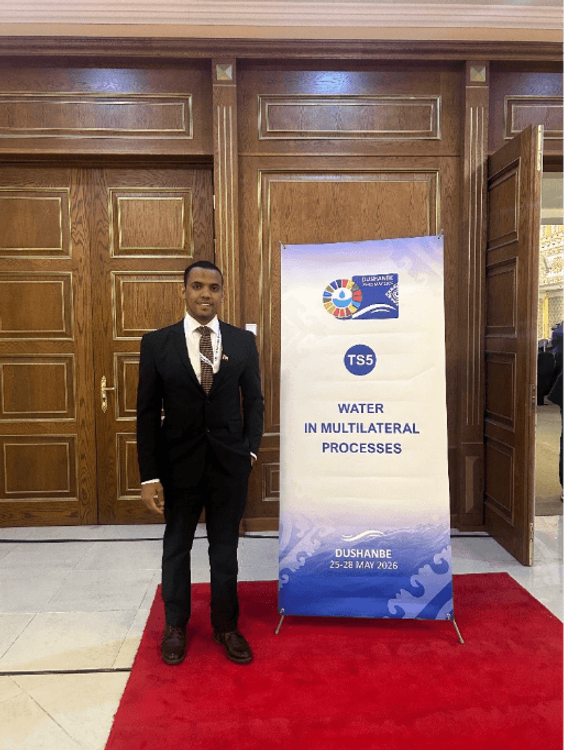
A seat in the room is not the same as a voice in the decision. This was one of my strongest reflections while serving as a youth-representative member on the International Advisory Committee (IAC) of the Fourth High-Level International Conference on the Water Action Decade, held in Dushanbe, Tajikistan, from 25–28 May 2026. The high-level conference brought together governments, United Nations agencies, financial institutions, scientists, civil society and youth. It was more than another international gathering on water. It connected the commitments made at the 2023 UN Water Conference with the upcoming 2026 Conference and the final review of the Water Action Decade in 2028.
Water connects our greatest challenges
One message appeared throughout the discussions: water can no longer be treated as a narrow sectoral issue. Water connects climate resilience, public health, food and energy security, biodiversity, economic development, peace and human mobility. Progress across the sustainable development agenda depends on how effectively we manage and protect it.
I noticed that participants were looking beyond the achievement of SDG 6 only, as the discussions focused on turning national and international commitments into tangible action that people could see and experience in their communities. Financing was therefore central. The Dushanbe Declaration calls for moving beyond fragmented, project-by-project funding towards predictable and scalable financing. It also highlights investment-ready water and sanitation systems, stronger institutions, transparent resource use and better access to public and private finance. Science and technology formed another major priority. As discussions here highlighted stronger monitoring, better data, early-warning systems and the responsible use of AI. Participants also stressed the need to connect scientific knowledge with policy decisions. The final Declaration also calls for stronger resilience to floods, droughts and scarcity, while protecting glaciers, mountain headwaters and wider source-to-sea systems.
Our role as youth
In my role on the International Advisory Committee, I worked with fellow youth delegates throughout the preparatory process in early 2026. We argued that young people should not be invited only to speak about the future. We should help shape decisions, implementation and accountability today.
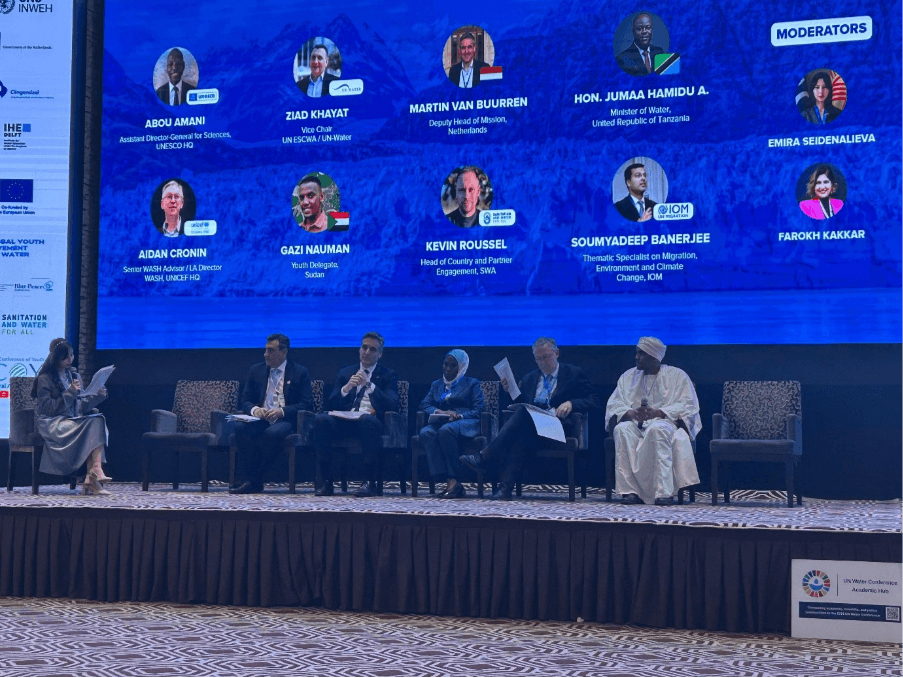
This message reached both the conference programme and its outcome. Youth representatives received dedicated places within the Conference’s Special Panels. The Declaration also calls for concrete opportunities in youth employment, entrepreneurship and innovation, supported by access to education, skills, financing and decision-making—especially for young women.
During an interactive consultation on the 2028 UN Water Conference and the post-2030 agenda, we emphasised that youth engagement must become institutional, measurable and continuous. Participation should lead to influence, responsibility and opportunities to contribute after the conference closes.
Young Professionals looking forward
These gains in the final Declaration did not begin in Dushanbe, and they belong to no single person or organisation. They build on years of work by youth networks and supportive partners, including IWA, the International Secretariat for Water, Youth Parliament for Water networks, UNESCO, the Water Youth Network and the wider Global Youth Movement for Water and its members. Therefore, coordinated continuity matters. A united youth community can carry lessons from one global process to the next while remaining connected to national and local realities.
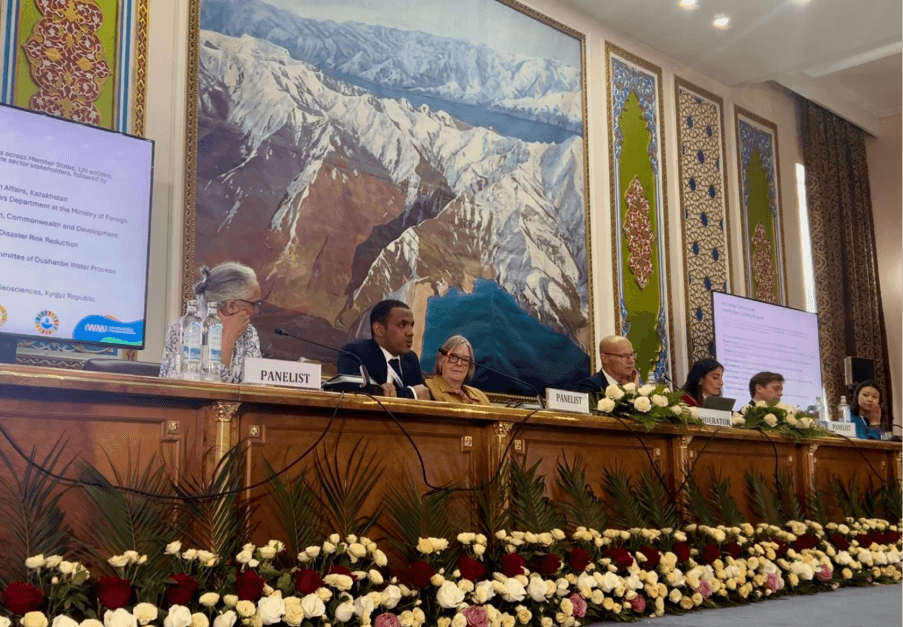
Dushanbe showed that the global water agenda is entering a decisive period. The 2026 and 2028 UN Water Conferences must become more than moments of visibility. They must establish accountable pathways for financing, implementation and inclusive water governance. As young water professionals, our role is not to wait for the future we are often asked to represent. Our role is to organise ourselves now, contribute our expertise, build partnerships and help deliver that future today.