From Infrastructure to Embedded Water: IWA Young Water Professionals at the Fair Water Footprints Conference 2026
Published on Mar 17, 2026
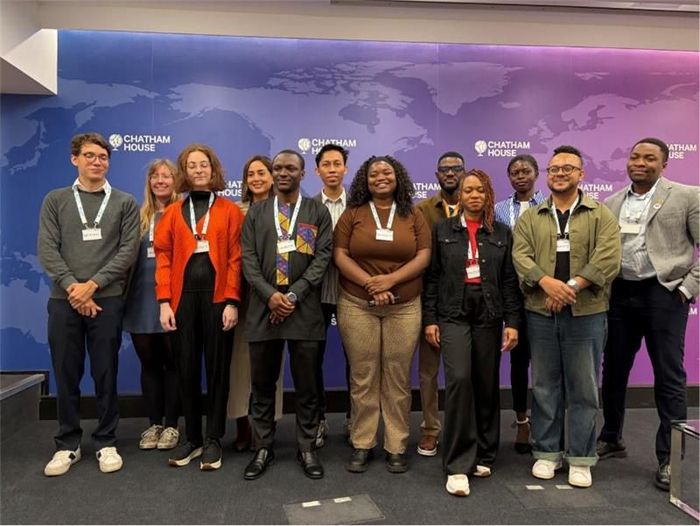
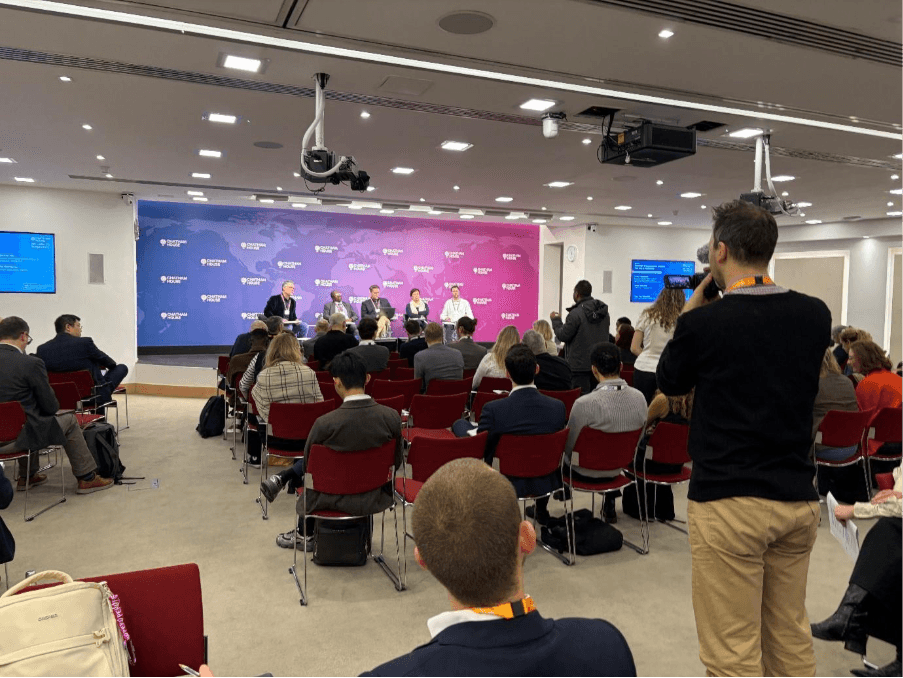
On 5–6 February 2026, Young Water Professionals members of the International Water Association (IWA) participated in the Fair Water Footprints Conference, followed by a youth strategy workshop convened by Water Witness International. What emerged over those days was not just a technical discussion about metrics, but a broader reflection on how we frame responsibility, risk, and equity in global water governance and management. The conference was held at the Royal Institute of International Affairs, Chatham House, in London, United Kingdom.
As water discussions accelerate ahead of the 2026 United Nations (UN) Water Conference, the Fair Water Footprints Conference provided a timely reminder: water stress is not only a question of infrastructure and finance. It is also shaped by consumption, trade, supply chains, and global economic structures.
For IWA’s Young Water Professionals (YWP) community, this space opened an important strategic conversation.
From Local Water Services to Global Supply Chains
For many professionals in the water sector, governance and management begin locally, with utilities, regulators, basin authorities, and service providers. This perspective was powerfully reflected in the contribution of Ximena Quiroz, IWA member from Peru and Regulatory Specialist at LIS-Water:
“While water and sanitation services are managed locally, many of the pressures on water resources are driven by global demand. Food, textiles and raw materials are often produced in water-stressed regions and consumed elsewhere. Yet water risks remain largely invisible in trade decisions and supply chains.”
For Luan Oliveira, member of the IWA YWP Brazil Chapter, “in the day-to-day management of sanitation projects, we know that the main bottleneck for major infrastructure, whether implementing dry-weather collectors or restoring complex ecosystems, isn't usually the engineering itself, but economic viability”.
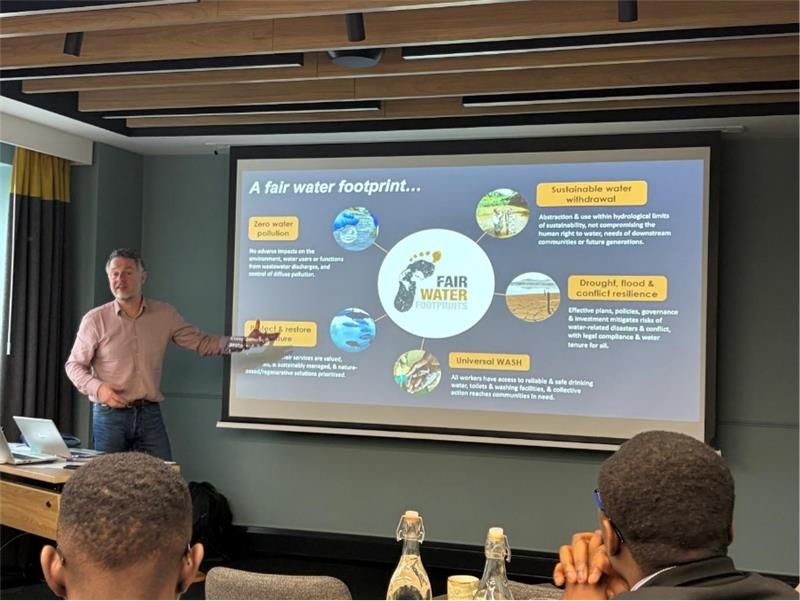
The concept of water footprints help make this visible. A water footprint measures the total volume of freshwater used and polluted to produce goods and services across the entire value chain, not just where extraction occurs. It captures:
- Blue water – surface and groundwater consumed
- Green water – rainwater stored in soil
- Grey water – water required to dilute pollution to safe levels
In short, water footprints reveal the “virtual water” embedded in food, energy, industrial goods, and international trade. This perspective shifts governance from purely territorial management to responsibility-based thinking: who drives water stress, where, and through what consumption patterns?
What Resonated: Investment Is Essential - But Not Sufficient
A strong theme across the conference was the need to elevate water politically and financially. As Natalie Lamb, chair of the IWA Young Water Professionals United Kingdom Chapter, reflected: “Unlocking action depends on expressing the wider value of water, particularly the return on investment for organisations, governments and investors”. The investment framing is crucial. Scaling finance, improving enabling environments, and strengthening institutions remain central to SDG 6.
However, discussions also surfaced an important gap. A review of the “Interactive Dialogue on Investments for Water” working paper for the 2026 UN Water Conference shows no reference to water footprints or consumption-based metrics. The framing remains largely production- and finance-oriented, focusing on infrastructure, utilities, and national financing environments. This is understandable. It is politically safer to discuss investments than to question consumption patterns or trade dynamics.
Yet without a demand-side lens, we risk treating SDG 6 primarily as an infrastructure gap, rather than a systemic challenge shaped by global supply chains, corporate accountability, and cross-border responsibility.
Water footprints sit exactly at the intersection of policy, regulation, and global governance. They are not a replacement for investment, but a complement that strengthens coherence between:
- SDG 6 (Water and Sanitation)
- SDG 12 (Sustainable Consumption and Production)
- SDG 2 (Food Systems)
- SDG 13 (Climate Action)
Youth Perspectives: Asking Sharper Questions
The Youth Workshop that followed the conference created space for deeper reflection. Participants explored questions such as:
- Who ultimately benefits from water-intensive production — and who bears the water stress?
- How can investors assess long-term water risk if indirect and supply-chain water use is not systematically considered?
- What risks do we run if consumption-driven pressures remain invisible in regulatory and investment decisions?
These are not confrontational questions. They are governance questions. Water footprints are sometimes dismissed as “too academic” or “too complex.” But the issue is often one of translation. The methodology is well established (including ISO 14046 standards). What is missing is integration into regulatory-grade tools — tariffs, disclosure frameworks, procurement rules, and permitting conditions. This is precisely where IWA’s network can add value.
Why This Matters
IWA’s network provides an interface for utilities, regulators, researchers, and global processes. It can act as a translation layer, moving from metric to governance and management. The Fair Water Footprints Conference highlighted a strategic opportunity:
To bridge investment and infrastructure agendas with demand-side accountability.
This does not mean overstepping regulatory mandates. It means clarifying where water footprinting can add value, and where it cannot. Potential entry points include:
- Supporting regulators in understanding how footprint data can inform basin allocation and industrial permitting.
- Connecting water risk disclosure (ESG, TNFD, corporate reporting) with utility and regulatory realities.
- Equipping Young Water Professionals with policy literacy tools to engage credibly in UN processes.
- Creating dialogue spaces between regulators, investors, and utilities on systemic water risk.
In many global forums, water footprints remain marginal. That creates both a gap and an opportunity.
From Awareness to Action
Perhaps one of the most powerful reflections from the conference came in a lighter but important reminder:
“Alongside the urgency, we need to produce some more good vibes in water.”
Optimism and collaboration are catalysts for change. The energy in the room, particularly from younger voices, reinforced that there is an appetite to move beyond siloed thinking. Water governance cannot remain confined to sectoral boundaries when supply chains, trade, and climate are reshaping local realities.
For the IWA YWP community, this experience reaffirmed three things:
- Technical competence matters. Metrics must be robust and defensible.
- Translation matters. Governance tools must be practical and regulator-ready.
- Youth voices matter. Not as symbolic participants, but as contributors able to link measurement, equity, and accountability.
As we move toward the 2026 UN Water Conference, there is space, and need, to broaden the framing of water security. It is essential to bring more financial resources into water systems. But so is understanding water embedded in economies.
The Fair Water Footprints Conference reminded us that SDG 6 will only be achieved through collaboration across sectors, borders, and generations, and by making visible the hidden connections between what we consume and the water realities of others.
IWA’s YWP community will continue to engage in this dialogue, working with members across utilities, regulation, research, and youth leadership to strengthen coherence between investment, governance, and responsibility.