Learning by Unlearning: Lessons from Saphale town on Safe Drinking Water
Published on Mar 17, 2026
By Pradip P. Kalbar, PhD, Indian Institute of Technology Bombay, Mumbai, India
My first visit to Saphale, in Palghar district of Maharashtra, India, was in 2017. I arrived full of enthusiasm and confidence that my team and I could offer technological solutions to improve access to safe drinking water in this emerging town with a population of about 30,000 (administratively still classified as a village). Our first step was studying the local water supply system and its challenges. But very quickly, something shifted, and we quickly realised that we had much more to learn about what it truly takes to provide safe drinking water on the ground.
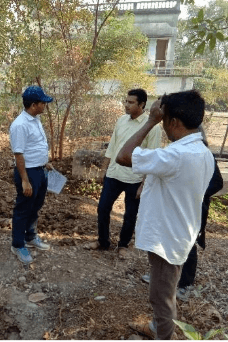
My first visit to Saphale Village in 2017 to study the water situation
The unlearning journey
With a background in civil and environmental engineering, significant real-life consulting experience in water supply systems, and a PhD from one of India’s top institutes, I arrived in Saphale town confident that I was well-prepared. That confidence, however, quickly faded as I realised that much of what I had learned and practised was of limited use in this local context.
Saphale town relied on a mix of water provisioning methods —none of which are adequately covered in mainstream engineering education or consulting practice. Due to several factors [1], water was supplied intermittently, once a day or on alternate days. Personally, I had never been taught how to plan or design water supply systems for such realities.
That was the beginning of my unlearning. I had to set aside much of my prior knowledge, question several assumptions, and relearn the fundamentals by engaging directly with ground realities. Embracing this process allowed me to step out of the theoretical frameworks I was trained in and connect meaningfully with those who managed water every day.
I began working closely with the local water staff, and a local leader once remarked that he had never seen someone from a top institution walk through every street of their town. These engagements marked the beginning of a trust-based relationship, opening the door to genuine collaboration. Through these interactions, I learned how residents creatively managed water scarcity, adapting systems and practices to meet their needs.
A persistent question stayed with me: when and how would this valuable local knowledge and practices find their way into mainstream practice?
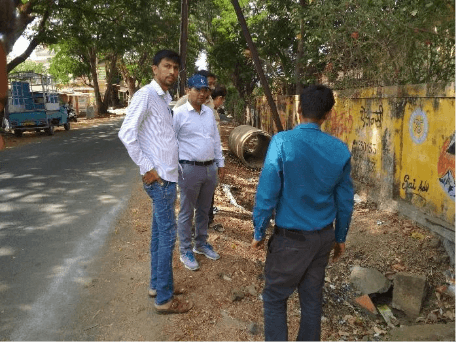
Our field studies at Saphale town
How can technology enable affordable and safe water?
Saphale’s residents represented a wide socioeconomic spectrum — from relatively affluent households to daily-wage earners and tribal communities. A multi-village water supply scheme implemented in 2005 had failed to deliver reliable drinking water. Many areas received little or no supply, and the water treatment plant became dysfunctional soon after commissioning because the local water committee lacked financial capacity to sustain operations.
Yet the town did not remain passive. In collaboration with an NGO, residents installed a packaged treatment plant, allowing them to collect purified water in jars or have it delivered to their homes. As a result, drinking water was effectively decoupled from the piped supply system: while the piped network continued to meet non-portable domestic needs, safe drinking water was ensured through a parallel system that proved more reliable and affordable.
This local resourcefulness is often absent from large-scale programmes and global missions. I frequently tell my students that the people of Saphale are, in many ways, wiser than many consultants whose one-size-fits-all solutions often fail on the ground. Technology must serve local contexts —not grand visions that collapse under their own weight. Appropriate, frugal solutions are essential to breaking the vicious cycle of failing water supply systems [1].
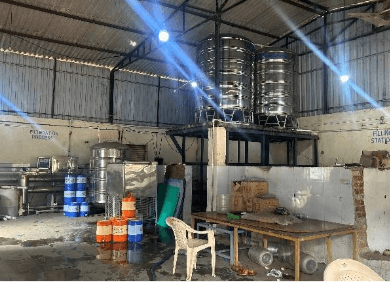
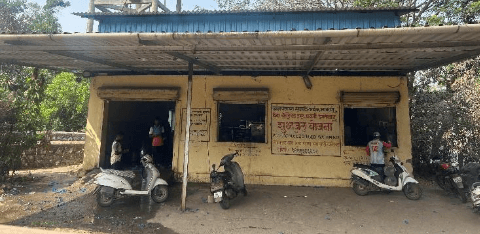
Sapahle town’s non-grid decentralised community drinking water packaged treatment plant – delivering safe water
Our simple innovation
One persistent problem in Saphale was leaking storage tanks and a shortage of land to construct new ones. Constructing another large tank would have been costly and largely ineffective. Instead, I proposed an innovative decentralised, shaft-based water supply system —a concept unfamiliar to the town and many designers at that time [2]. Yet, having already experimented with multiple solutions on their own and the trust we had built, the people of Saphale were willing to try something new.
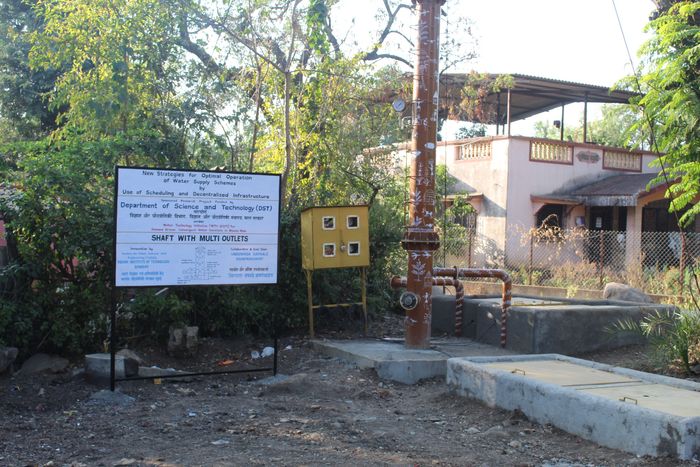
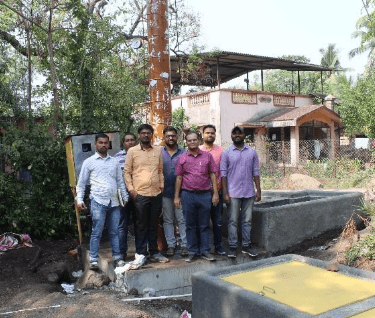
Working closely with the local team and supported by research funding from the Department of Science and Technology (DST), New Delhi, we installed India’s first shaft-based water supply system [3]. The results were remarkable. The system eliminated the need for large storage tanks, required significantly less land, brought pressure points closer to habitations, and improved equity and reliability in water distribution.
Following this success, demand for this solution grew rapidly. Through collaborations with various organisations, more than twenty shaft-based water supply systems have since been installed. Saphale itself installed another system independently. Many other towns had adopted the technology, and a start-up company now provides these solutions [4]. For me, this represents the true measure of success — affordable technology that communities adopt and sustain on their own.
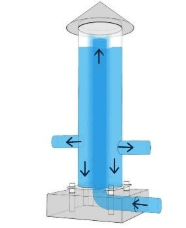
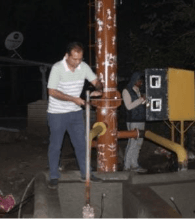
Our first shaft-based water supply systems in Saphale and its replications in rural and urban areas in Maharashtra State
Rethinking mainstream solutions
Today, multiple approaches to water provisioning exist: decentralised systems, community-scale packaged treatment plants, and well-managed intermittent supply systems. Yet policy and practice often have a narrow focus.
If we genuinely aim to provide safe, reliable drinking water, we must prioritise context-specific alternative water-provisioning approaches for different uses. Accepting and scaling such solutions is not a compromise — it is smart, grounded engineering.
*Note: This blog article is part of a blog series aligned with the International Water Association’s Safe Drinking Water in Developing Countries Programme. This blog series aims to explore the role of technology in securing safe drinking water, highlighting key challenges faced and real-world case studies demonstrating how innovative and affordable technologies are helping communities transform unsafe water into a reliable and safe source of life. If you would like to submit an article for this series, please contact Brenda Ampomah at brenda.ampomah@iwahq.org
Further reading:
[1] Ghorpade, A., Sinha, A. K., & Kalbar, P. P. (2021). Drivers for Intermittent Water Supply in India: Critical Review and Perspectives. Frontiers in Water, 1-15. https://www.frontiersin.org/articles/10.3389/frwa.2021.696630/full
[2] Kalbar, P. P., & Gokhale, P. (2019). Decentralized infrastructure approach for successful water supply systems in India: Use of multi-outlet tanks, shafts, and manifolds. Journal of Water Supply: Research and Technology - AQUA, 68(4), 295–301. https://doi.org/10.2166/aqua.2019.158
[3] https://www.pib.gov.in/PressReleasePage.aspx?PRID=1691483®=3&lang=2
[4] Shaft based water distribution system https://youtu.be/akUwaRyvrZ4