Will our Water Systems Survive the Climate Storm?
Published on Feb 3, 2026
By Angelo Siragusa, Independent Researcher and Team Leader, WSP (Italy) and Fatemah Dashti, Researcher and Co-Chair, WSP (Kuwait).
Climate change is no longer a distant threat, and it is reshaping our world through the hydrological cycle. These unstable patterns challenge the achievement of the 2030 Agenda. The water sector needs systems strong enough to absorb these shocks, and this can only be achieved by bridging the gap between strategy and reality.
The Reality of the Crisis
Global warming has broken the old rules of water management. We are witnessing a cycle of extremes: punishing droughts followed by intense, unpredictable floods. These events do more than just damage pipes; they contaminate our sources and spread disease.
In my work, I see how these burdens fall unevenly: women and girls in the poorest communities often pay the highest price. At the same time, our traditional "grey infrastructure" is becoming fragile under these growing pressures. This reality demands a transition towards "smart and resilient" investments that consider the full life cycle of our assets.
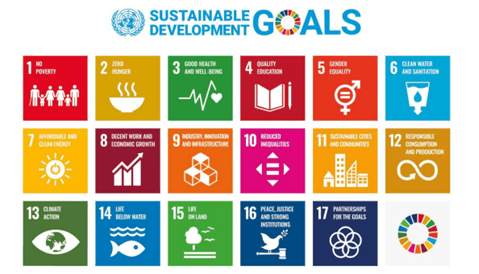
Figure 1: The 17 UN Sustainable Development Goals (SDGs). Water security is central to achieving these global targets.
The Cost of the Industrial Revolution: Climate Change
Since the Industrial Revolution, the Earth’s climate has never been the same. When factories, machines and power plants began burning large amounts of coal, oil, and natural gas, they released huge quantities of greenhouse gases into the atmosphere. These gases trap heat, and over time, they have warmed the planet to levels not seen for hundreds of thousands of years. Today, the Earth is already about 1.2°C warmer than it was before industrialisation began. This warming is changing how water moves around the planet. Hotter air holds more moisture, which leads to stronger storms and heavier rainfall, but it also causes longer and deeper droughts. We now see extreme dry conditions in places like the western United States and the Horn of Africa, while devastating floods hit countries such as Pakistan, China, Indonesia, and Brazil. These problems are further compounded by melting glaciers and rising seas. Glaciers in the Himalayas, Andes, and Alps, natural water reservoirs for billions of people, are shrinking fast. At the same time, rising oceans are salinising freshwater systems due to rising sea levels, degrading groundwater quality, and threatening the supply of potable water in coastal regions globally. Separate climate disasters are now part of one global water crisis, one that is growing faster than many communities and governments can keep up with.
Developing Countries Suffer More Than Developed Countries from Climate Change
Although climate change is a global phenomenon, its impacts are far more severe in developing countries than in developed ones. High-income countries generally have strong economies, advanced infrastructure and early warning systems, enabling them to prepare for climate extremes and recover more quickly. In contrast, many low-income countries depend heavily on climate-sensitive sectors such as agriculture, fisheries, and groundwater, while lacking the financial and technical capacity to cope with climate disasters. In Pakistan, extreme rainfall and flooding in 2022 destroyed homes, crops, and water and sanitation systems, exposing millions of people to disease and long-term economic hardship. In the African region, prolonged droughts in Somalia, Ethiopia, and Kenya have repeatedly reduced rainfall, leading to crop failure, livestock losses, and chronic food and water insecurity. Climate-related damage to water systems, farmland, and public health can take many years or even decades to repair. Because developing countries often lack sufficient financial resources, modern infrastructure, and institutional capacity, they are less able to adapt to climate change or rebuild after disasters. As a result, climate change deepens poverty, increases inequality, and slows economic development in the regions that are least responsible for causing the problem.
Integrated Strategies for Change
Building resilience requires more than just better technology. We need a holistic framework that combines different tools:
- Adaptive Governance: We must abandon the idea that the future will look like the past. Our planning models must use predictive climate data to identify "no-regret" options.
- Nature-Based Solutions (NbS): Nature is often our best ally. Investing in forests and wetlands creates "natural sponges" that stabilise flows and improve water quality.
- Circular Systems: We should stop viewing wastewater as waste. Advanced treatment allows for safe water reuse, supporting responsible consumption.
- Digital Innovation: Using the Internet of Things (IoT) and Artificial Intelligence (AI) helps us monitor systems in real-time and reduce leaks.
The Power of Water Safety Planning
The most effective tool we have is the Water Safety Plan (WSP). It is a proactive risk management system that covers everything from catchment to consumer.
By integrating climate risk assessments into WSPs, we ensure that resilience isn't just a high-level theory. It becomes part of daily operations. For example, if we identify a flood risk, we don't just protect the plant; we increase monitoring to stop contamination. This approach protects public health and supports SDG 3 (Good Health and Well-being).
The Role and Effectiveness of WSP in Climate Resilience
Safe drinking water is a basic human right, but climate change is making it harder to achieve this. WSP helps water systems deal with these risks in a smart and organised way. Instead of reacting after a problem happens, WSP focuses on identifying dangers early. It looks at the whole water system from the river or well to the tap, and sets clear rules for monitoring, treatment, and emergency response. When climate risks are included, WSP becomes even stronger, helping water providers better prepare for floods, droughts, and rising sea levels.
Climate-resilient Water Safety Plans also include practical solutions such as:
1. Establishing innovative procedures and standards to reduce the risks of sudden floods, including the design of flood-resistant buildings and water facilities to minimise disaster-related losses.
2. Improving water management by safely reusing rainwater and protecting groundwater from contamination.
3. Strengthening public awareness and community participation in disaster planning and decision-making.
4. Developing flood-risk maps and action plans to identify high-risk areas and reduce potential damage.
5. Studying the impact of community awareness and public participation on sustainable urban development and a city’s ability to adapt to climate-related disasters.
By combining good planning, strong management, and climate awareness, WSPs have become one of the most effective tools for building climate-resilient water systems. They protect public health, reduce disaster losses, and help cities and communities adapt to a changing climate.
A Path Forward
Achieving water security is the fundamental requirement for a sustainable future. The WSP Specialist Group of the International Water Association is committed to spreading WSP practices because resilience must be an accessible good for everyone.
The transition to adaptive and circular systems is not optional; it is an essential investment for global stability. Let us use these operational tools as our compass to overcome the climate crisis.
Join the 2026 IWA International Water Safety Conference and Exhibition (IWA–WSCE) in Ratmalana, Sri Lanka, from March 23–25, 2026, to join the discussion on recent advancements and innovations on the Water Safety Plan.
Reference
Global Water Bankruptcy: Living Beyond Our Hydrological Means in the Post-Crisis Era (Global Water Bankruptcy | United Nations University)