Young Water Professionals in Action: Exploring Innovation with the Nano and Water Specialist Group
Published on Jun 16, 2026
By Marina Batalini de Macedo & Andrea Carranza Muñoz, IWA YWP Steering Committee
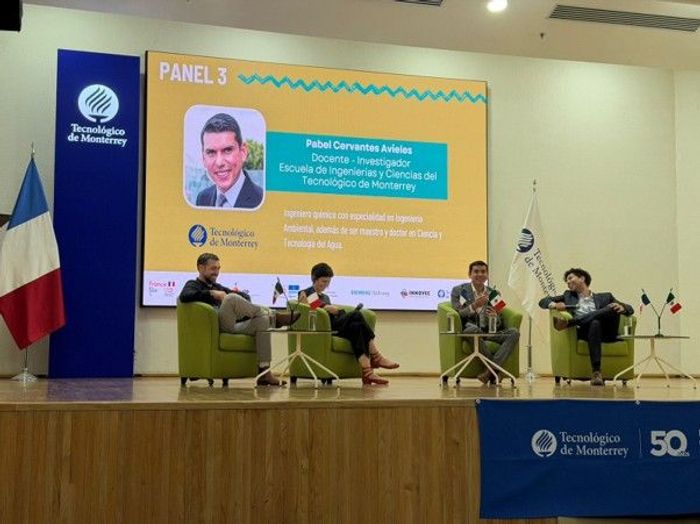
As water challenges grow in complexity, innovation at smaller scales is opening new frontiers for treatment and management. The IWA Specialist Group on Nano and Water sits at the intersection of cutting-edge research and practical application, exploring how nanotechnology can reshape the future of water and wastewater treatment. In this sense, to continue our blog series on IWA's Specialist Groups (SGs), we spoke with Prof. Dr Pabel Cervantes Avilés, active member of the IWA Management Committee of Nano and Water Specialist Group (SG). From this talk, we gain insight into how this global community is advancing knowledge, fostering collaboration, and creating meaningful opportunities for Young Water Professionals (YWPs).
At its core, the Nano and Water SG focuses on the development and application of nanotechnologies for water and wastewater treatment. This spans the full spectrum: from the synthesis of nanomaterials to their implementation at laboratory and pilot scales. Importantly, the group also engages with the broader implications of these technologies, including regulatory gaps and potential environmental risks, as nanomaterials themselves may become emerging pollutants if not properly managed. “Nanotechnology is very broad,” Pabel explains. “It can be applied in catalysis, adsorption, disinfection, i.e. many different processes. What makes it particularly relevant today is that technologies are becoming smaller and more efficient, and nanotechnology can also be used to complement traditional treatment systems.”
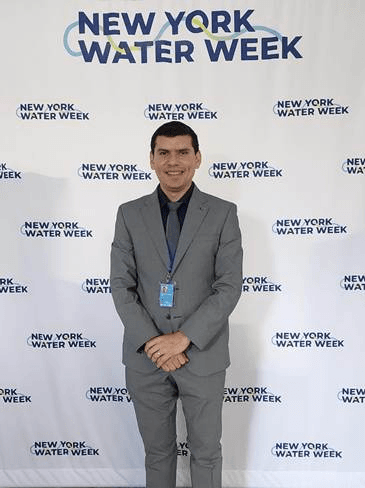
Engagement within the group is driven by a mix of knowledge-sharing and collaboration. Regular online seminars focus on both emerging “hot topics” and contributions from highly recognised experts in the field, who are also part of the SG. These events not only attract a wide audience but also provide a platform for members, both senior professionals and early-career researchers, to present their work and improve their knowledge through cutting-edge research on the topic. In addition, the group has recently organised international conferences in collaboration with partner associations, creating valuable spaces for in-person exchange.
For the group, engaging YWP is not just beneficial, but it is essential. YWPs are often at the forefront of research and innovation, bringing updated knowledge, energy, and the capacity to explore new applications of nanotechnology. “They are the ones doing the research and developing these technologies,” Pabel notes. “They have the time and motivation to push ideas forward.” This contribution is already visible. One example shared by Pabel highlights a YWP who transformed the impact of a webinar by creating a concise booklet summarising key presentations. By validating the content with the original speakers, this initiative extended the reach and accessibility of the knowledge shared by demonstrating how proactive engagement can generate lasting value.
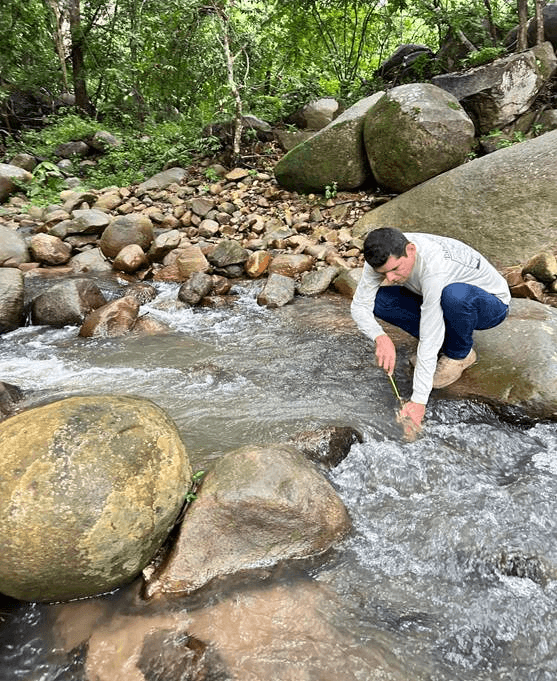
For YWPs considering joining the Nano and Water Specialist Group, the benefits go far beyond technical knowledge. Pabel reflects on his own experience of joining an IWA SG during his PhD, when he recognised that many leading researchers in his field were active members. “It gave me a way to interact with them, to build a network, and to access first-hand information on research and innovation,” he says. “Opportunities often come through people you know, and this group helps you build that high-level network.”
Participation in IWA activities more broadly can also strengthen professional development. According to Pabel, engaging with both YWP networks and SGs allows early-career professionals to increase their visibility, make more informed career decisions, and access opportunities such as collaborations, projects, and fellowships. Taking initiative, such as organising activities or contributing to group efforts, can further demonstrate leadership and open new pathways. While participating in a global community comes with challenges, such as navigating different time zones, Pabel emphasises that the benefits outweigh the effort. The connections, knowledge exchange, and collaborative opportunities make active involvement worthwhile.
Being part of the SGs has also played a significant role in Pabel’s own career. Through the network, he has connected with internationally recognised experts, contributed to scientific committees, and gained visibility representing Latin America in a global context. These experiences have helped him improve the quality of his work and make more efficient use of limited resources, which can be an important consideration for many researchers.
Finally, he highlights that professionals are not limited to a single Specialist Group. Engaging with multiple groups, such as his own experience, also with the Membrane Technology SG, can broaden perspectives and strengthen interdisciplinary connections. For employers and institutions, this international engagement is increasingly valuable, providing access to global networks that support research, innovation, and collaboration.