19th International Conference on Wetland Systems for Water Pollution Control
Dates
12 Sep 2026 - 16 Sep 2026
Greece
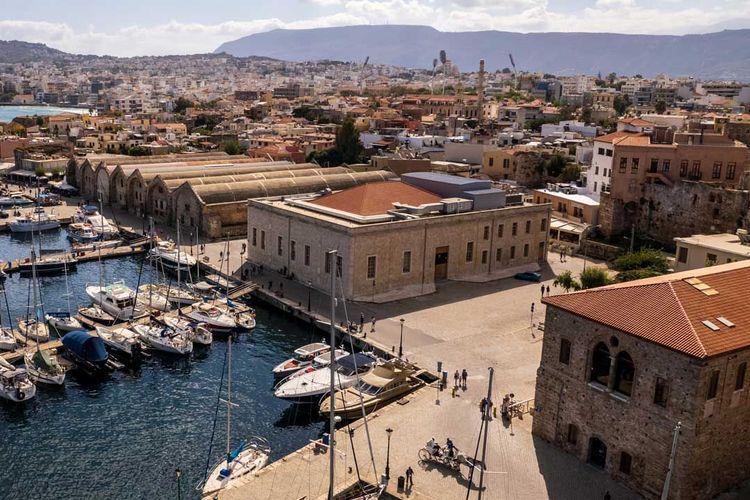
ChaniaDescription
The 19th International Conference on Wetland Systems for (ICWS2024) will take place in Chania, Greece, providing a platform for scientists and practitioners to exchange knowledge and advance understanding of treatment wetlands. Conference topics will cover wetlands in harsh and urban environments, wetlands for circular economy and resource recovery, intensified and hybrid wetlands, removal of emerging contaminants, wetland co-benefits and multifunctionality, process understanding and modelling, case studies, monitoring and remote sensing, conservation and restoration, and economic aspects of wetland systems.
Proposed Themes:
Wetlands in Harsh Environments: Treatment wetlands in hot, arid, tropical, and cold climates; wetlands in isolated, remote, or insular areas.
Wetlands in Urban Environments: Integration of wetlands in cities; wetlands combined with other nature-based solutions (green walls, roofs, bioswales) for urban water management and circular cities.
Wetlands for a Circular Economy: Roles in water reuse, agronomic resource recovery, biomass production, and the bioeconomy.
Intensified Wetlands: Aerated wetlands, hybrid wetlands, and microbial fuel cell wetlands.
Emerging Contaminants: Removal of persistent and emerging organic compounds, microplastics, pesticides, metals, and their effects on wetlands, biodiversity, and human health.
Co-benefits and Multifunctionality: Ecosystem services (biodiversity, carbon capture), water-energy-food nexus, and social benefits (landscape, public participation, education, policy, planning).
Process Understanding and Modelling: Advances in microbiology, biogeochemistry, fluid flows, tracer tests, multi-phase interactions, and design modelling approaches.
Case Studies: Wetlands treating agricultural runoff, sludge, industrial wastewater, stormwater, combined sewer overflow, and domestic wastewater.
Monitoring and Remote Sensing: Sensors, real-time monitoring, online process control, data management, remote sensing, and spatial-temporal information.
Conservation and Restoration: Natural and constructed wetlands for ecosystem restoration, habitat creation, and biodiversity conservation.
Economics: Economic aspects, cost-benefit analyses, and advantages over conventional technologies (CAPEX/OPEX).
Organising Committee
| Name | Affiliation | Country |
|---|---|---|
| Prof. Alexandros Stefanakis, Chair | Technical University of Crete | Greece |
| Prof. Florentina Zurita Martínez | University of Guadalajara | Mexico |
| Dr. Panagiotis Regkouzas | Technical University of Crete | Greece |
| Elissavet Koukouraki | Technical University of Crete | Greece |
| Ioannis Asimakoulas | Technical University of Crete | Greece |
| Emmanouela Karefylaki | Technical University of Crete | Greece |
| Eirini Athanasiadou | Technical University of Crete | Greece |
| Ioannis Moukazis | Technical University of Crete | Greece |
| Marcio-Yukihiro Kohatsu | Technical University of Crete | Greece |
| Elaine Joy Jacinto | Technical University of Crete | Greece |
Programme Committee
Margit Kõiv-Vainik – University of Tartu, Estonia
Florentina Zurita – University of Guadalajara, Mexico
Pedro Carvalho – Aarhus University, Denmark
Tjaša Griessler Bulc – University of Ljubljana, Slovenia
Bernhard Pucher – BOKU University, Austria
Joan Garcia – Polytechnic University of Catalonia, Spain
Tahra Alrashdi – Sultan Qaboos University, Oman
Katharina Tondera – Claude Bernard University Lyon 1, France
Giuseppe Cirelli – University of Catania, Italy
Yaqian Zhao – Xi’an University of Technology, China
Fabio Masi – Iridra Srl, Italy
Important Dates / Key Deadlines
- First call for papers: October 8, 2025
- Registrations portal open: December 1, 2025
- Abstract submission deadline March 31, 2026
- Author notification April 19, 2026
- Early bird registration deadline MAY 10, 2026
- Registration deadline: JULY 31, 2026