Formalising Manual Pit Emptying Services in Informal Settlements
This webinar will examine how sanitation providers can be formalised through two Kenyan case studies.

Fresh Life Sanitation Services
Starts
Sep 03, 2026
Language
EnglishDuration:60 minutes
Start Time:
14:00 GMT+1Format
OnlineMember fee(LMIC): 00.00
Member fee: 00.00
Standard fee: 00.00
Webinar Video
Webinar Presentation
Description
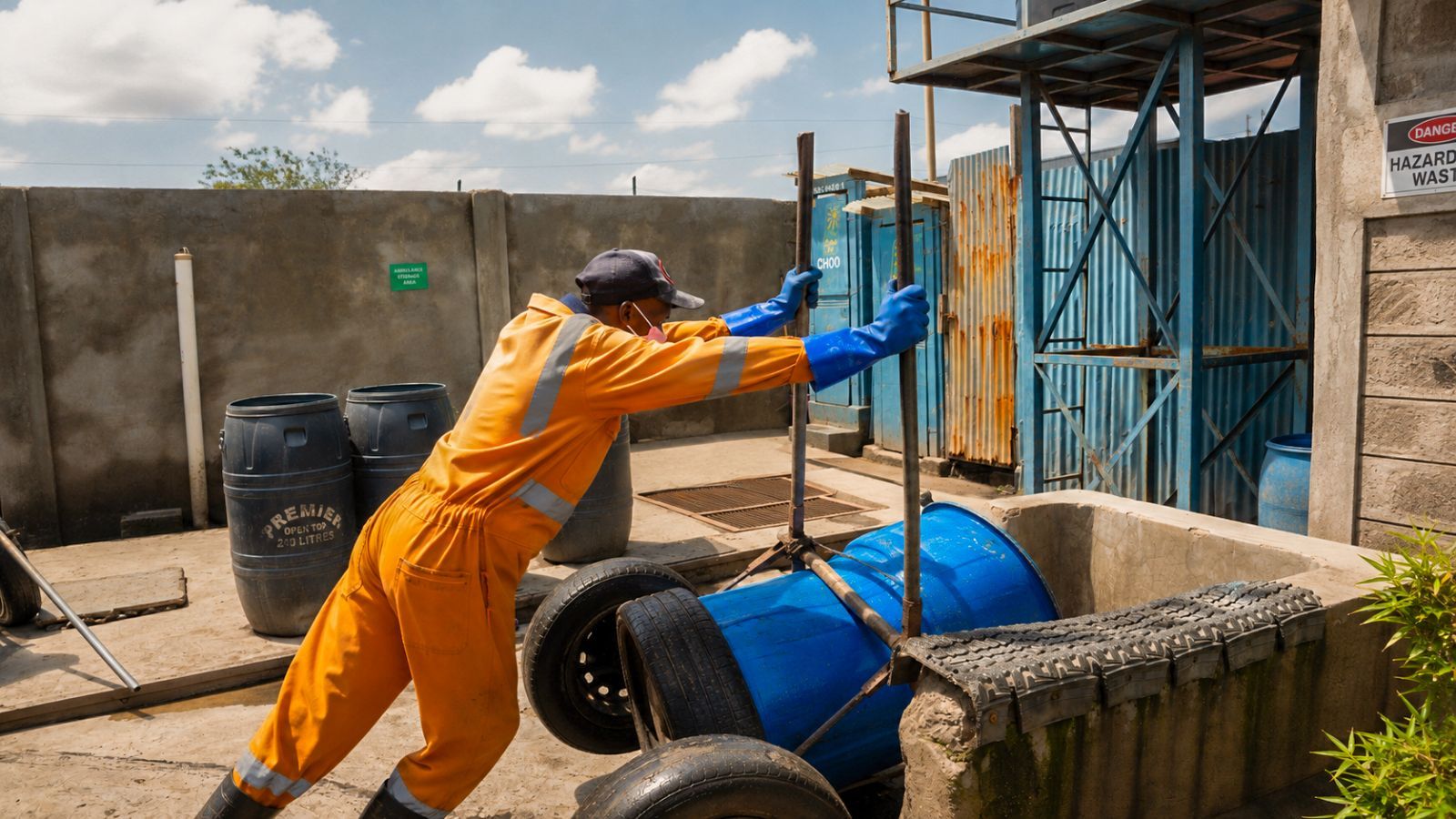
In many dense informal settlements, conventional vacuum trucks cannot reach pit latrines, leaving manual pit emptiers to provide an essential but often unsafe and unrecognised service. This webinar will examine how sanitation providers can be formalised through two Kenyan case studies.
Fresh Life’s Mtaa Fresh Centre model in Nairobi, addresses this challenge by providing safe, staffed transfer stations where manual pit emptiers can discharge faecal sludge without releasing it into the environment. The model has supported the organisation of 45 manual pit emptiers into community-based organisations and enabled the safe management of more than 4.5 million litres of faecal sludge. While in Kisumu, the focus is on recognising and integrating informal sanitation providers into citywide service delivery through training, equipment, stronger links with utilities and improved access to treatment facilities.
Target Audience
Sanitation practitioners, water utilities, NGOs, National and Country government officials, researchers, and students.
Learning Objectives
Following this session, participants will be able to:
- Describe the core design elements of a manual pit-emptying service
- Identify the factors that enabled manual pit emptiers to formalise into a community-based organisation
- Apply lessons on government and community partnership to sanitation challenges in their own context
Learning Format
Webinar Outcomes
- Safe pit sludge management is achievable even in dense informal settlements through locally adapted, community-led solutions.
- Formalising manual pit emptiers improves public health, environmental protection, and creates safer, more dignified livelihoods.
- Partnerships between utilities, governments, communities, and private organisations are essential for scaling citywide inclusive sanitation.
Speakers/Panelist Details
- Nancy Ngao, Fresh Life, Government Affairs and Policy (https://www.linkedin.com/in/nancy-m-ngao-b5766964/)
- Elizabeth Mururi, Fresh Life Corporate Communications and Marketing Associate Director - Nairobi Kenya (https://www.linkedin.com/in/elizabeth-mururi/
- Nicola Green, Opero Services, Director, (https://ke.linkedin.com/in/nicolagreene)
- Wali Mwalugongo, Fresh Life Partnerships and Advisory Associate Director - Nairobi, Kenya (https://www.linkedin.com/in/wali-mwalugongo-85a7448a/)
- Joel Obunga, Kisumu Water and Sanitation Company Limited - Sanitation Officer (https://www.linkedin.com/in/joel-obunga-04024492/)
- Francis Kuria, Product Manager, Mtaa Fresh - Fresh Life
- Joseph Muiruri, Manual Pit Emptier, Mukuru Kwa Njenga
Related IWA Specialist Groups
Non-Sewered Sanitation (NSS)
The next-generation toilet technologies are on their way and are shifting away from the current “flush-and-dispose” and “drop-and-store” models. It is envisaged that the new generation of technologies will be point-of-use or beneficiation generation systems which aim to eliminate human waste at source. New systems will incorporate in it the water sensitive design planning and thinking. It aims to be smart, working off-the-grid and treating human wastes at source, eliminating pathogens, and possibly generating products of beneficial value. The next generation toilets could also be coupled with the latest developments in online monitoring and sensing.
The main purpose of this newly established Specialist Group is to bring together experts, scientists and practitioners with experience in FSM and non-sewered sanitation - to generate, collate and disseminate knowledge in the area worldwide. This knowledge aims to guide sanitation service provision in a sustainable way thus improving the quality of life for millions of people using on-site sanitation systems and therefore contributes towards achieving SDG target 6.2. In this effort, we will work closely with other Specialist Groups, including Resource Orientated Sanitation, Sludge Management and Sanitation and Water Management in Developing Countries, in areas where there will be interest in jointly furthering knowledge and understanding of FSM.
The NSS SG focus is on but not limited to the following areas:
- Baseline data: building a data base of FS accumulation rates and characteristics,
- Educational: capacity building in local context, technical and non-technical competency to deal with non-sewered sanitation.
- Technical: Promoting and sharing the science on new and novel treatment process, design requirements and techniques.
- Institutional: strengthening governance and reform to facilitate non-sewered sanitation; supporting business model and incentives; paradigm shift to technical solutions that recover resources (water, energy, nutrients). Building a new sanitation circular economy.
- Social: stimulate behavior change and acceptance; developing awareness and educational products; consideration of vulnerable groups, which are adversely affected by the lack of appropriate sanitation.
- Communication: It is of the utmost importance to communicate all the above in an effective, approachable and convincing manner in order to achieve a desired global impact.
- Training and Capacity Building: developing a new cohort of practitioners and specialists.
- Group activities:
- - Organisation of workshops at key international events (IWA World Water Congress; IWA Development Congress; World Water Forum) to report on progress and content of NSS Specialist Group and to raise awareness of the work amongst international audience.
- - Organisation of international and regional specialised conferences on NSS as a Specialist Group Participation in workshop / presentations in world regions where it is most needed (developing countries) to disseminate experience and knowledge within the NSS and promote the development and implementation of some of NSS innovative and novel technologies appropriate for the local context.
- - Communications and interactions between NSS members with IWA Connect.
- - Promotion of science, technology and practice development of the NSS field through The Source magazine, partners platforms, short articles, group newsletters, special publications etc.
- - Establishing a new community of practice which include innovators, scientists, entrepreneurs, policy makers and municipal officials.
Sludge Management
Sludge treatment and management is a growing challenge for countries globally. The cost of sludge treatment constitutes to approximately half of the cost of wastewater treatment, and the quantities continue to increase as new wastewater treatment facilities are built and the existing ones are upgraded to keep up with the growing population and stricter regulations that require more treatment. In developing countries, faecal sludge management plays a key role in protecting public health and environment.
IWA Specialist Group in Sludge Management deals with all kinds of sludge including sewage, faecal, waterworks, and industrial sludge. The objectives of the group are to advance knowledge and transfer scientific and technical information on all aspects of sludge management, including production, characterisation, stabilisation, digestion, thickening, dewatering, thermal processing, agricultural reuse, production of usable materials, and ultimate disposal. Relevant to the group activity is also the integrated management of sludge with other organic wastes.
We are finally at a point that sludge is not seen as a waste but as a renewable source of energy, nutrients, organic matter and water. Resource recovery will continue to be at the center of sludge treatment and management with special emphasis on harvesting the energy value through anaerobic digestion and thermal processes, co-digestion of sludge with food and other organic waste to increase biogas production, phosphorus recovery, and beneficial use for agriculture. Agricultural use of sludge will likely be more challenging in the near future and there will be a shift towards exceptional quality sludge for land application with strict limits on heavy metals, emerging contaminants and pathogens. A shift towards wastewater treatment processes that generate less sludge either by employing pretreatment technologies or by switching from aerobic to anaerobic treatment processes is also expected. Furthermore, there is also a need for new and innovative thickening and dewatering technologies. After all, 95-99% of sludge is water and it is the water content that determines the size and design of downstream treatment processes as well as the feasibility of land application, incineration and landfilling.
In 2018, our group will continue to organize major international conferences and workshops on sludge treatment and management around the world, will produce publications to achieve wide dissemination of shared experiences and new knowledge, and will aim to offer solutions, best practices, and roadmaps to sludge treatment and management challenges faced in different parts of the world.