Water Strategy and Planning
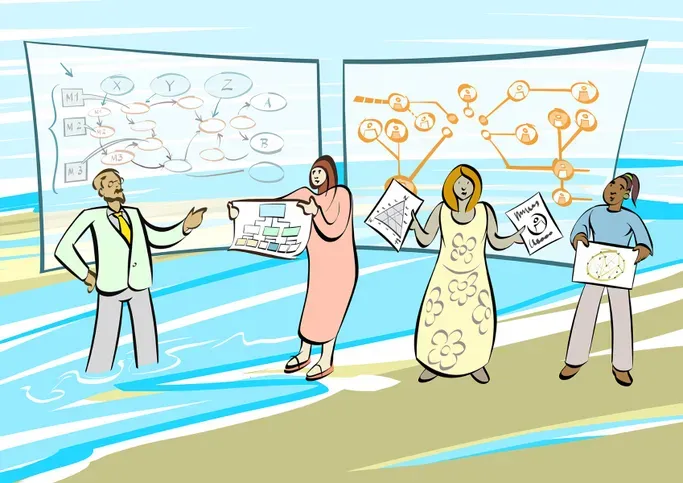
Develop your expertise with multiple courses at a discounted price. The first course in the programme focuses on how to apply systems thinking to address complex water problems. The second course focuses on how to use advanced methods for stakeholder analysis to deal more effectively with sensitive processes of dialogue, conflict, negotiation or cooperation among different actors.
TU Delft
IHE Delft Institute for Water Education
Starts
Feb 04, 2026
Language
EnglishCertification
TU Delft and IHE Delft Institute for Water EducationDuration:16 weeks
Course Type
OnlineMember fee: €1,170.00
Standard fee: €1,300.00
Course Description
Acquire strategic planning methods and approaches to deal with complex challenges in water policy and management.
Solving today’s water challenges is key to sustainable development but it has become increasingly complex due to the many sectors and stakeholders involved. Sectoral engineering approaches and economic management models alone no longer suffice to develop effective water strategies and policies. A more holistic, integrated and inclusive approach is needed to ensure the wise management and use of water, for current and future generations.
Governments, companies and international organisations in the water sector increasingly seek professionals who can use critical strategic thinking, both from a systems and a stakeholder perspective. This programme will help you master and sharpen the skills essential for effective policy analysis, strategy and planning.
The courses in this programme offer you the state-of-the-art approaches and tools required to deal with complex and multi-actor challenges in the water sector. You will learn how to use systems thinking and stakeholder analysis to develop integrated, future-oriented water policies and strategies. They will improve your ability to solve water problems across sectoral, spatial and institutional boundaries.
This online programme is developed and taught by experts in policy analysis and water management from TU Delft and the IHE Delft Institute for Water Education. It fruitfully combines TU Delft’s expertise in multi-actor systems with IHE Delft’s long-standing experience in graduate education for the water sector worldwide.
Details
The first course in the programme focuses on how to apply systems thinking to address complex water problems. The second course focuses on how to use advanced methods for stakeholder analysis to deal more effectively with sensitive processes of dialogue, conflict, negotiation or cooperation among different actors.
These online courses combine video lectures, reading materials and practical exercises to introduce you to new policy and planning methods and approaches. Tailored feedback from instructors helps you apply those methods to water problems in your own field of work.
Course Audience
This online programme is primarily geared towards working professionals.
Prerequisites:
None. Experience in working with stakeholder networks is a plus. Some practical experience in working in a water or environmental policy context would be a bonus.
Learning Format
Course Outcomes
- The programme enables you to grow into the role of a water strategist and policy analyst.
- Water professionals with an enhanced ability for strategic thinking, flexibility and creativity in tackling new complex water challenges are indispensable and in great demand by government agencies, companies and utilities all over the world.
- "Half of the world's workers - 1.5 billion people - are employed in eight water and natural resource-dependent industries" (unwater.org)
- If you successfully complete this online programme you will earn a joint certificate from TU Delft and the IHE Delft Institute for Water Education, and you are eligible to receive 10 Continuing Education Units (CEUs).
Related IWA Specialist Groups
Watershed and River Basin Management
The objective of the Specialist Group is to promote the understanding, benefits and utilisation of integrated catchment management approaches for the beneficial and sustainable use of rivers, lakes and groundwater basins worldwide. It seeks to achieve this by the sharing of expertise and experience among its members and with other interested individuals and organizations, organizing specialist conferences, issuance of newsletters, undertaking cooperative projects and other activities of the International Water Association.
Management of watersheds as integrated hydrologic and ecosystem units, with an integrated approach to groundwater and surface water, water supply and water quality, climate change and its impacts on water resources, managing extreme events of flood and droughts, integrated urban water management, and environmental services from water resources. Whole system management approaches are key to a sustainable water future, because system management will lead to improvements in efficiency and the support of more sustainable systems. An integrated approach would allow greater system optimization and better outcomes.
The Water-Energy-Food Nexus idea is compatible with the whole watershed approach discussed above and the approach is starting to get some recognition as an approach for research, planning, and management.
The use of continuous data collection and remote sensing will continue to expand and grow. Challenges related to the processing and interpretation of these new and massive data streams (so-called Big data) are going to be a growing focus in water management.